Since I have not been able to sell my last two picture books I’ve decided to bite the bullet and delve back into YA. Why not?
I’m fifty pages in, and every time I get stuck I ask, “why not?” We are so conditioned (at least I am, as my students can confirm) to ask “why.” One of the reasons I’ve been avoiding another novel is because I’ve felt that the field was becoming full of shoulds. It should be about vampires. It should be a potential series. It should use modern technology. I have certainly asked why of all these and more, and then hid under my bed cowering in fear (along with many of my colleagues and peers).
Asking “why” implies that something is not working, someone doesn’t understand what you are trying to say, right? Asking “why not” implies that you have an idea, maybe a wacky, bizarre, crazy idea, but you might as well try it.
For example:
WHY NOT have a trainjack in a contemporary novel?
WHY NOT kill off some important people? (and I don’t mean kill as in take them out)
WHY NOT have your character join a circus?
WHY NOT put her in serious danger around every corner?
I mean, if it doesn’t work after the first draft so what? Then you can ask the annoying “why” questions and fix it. (I still believe at some point “why” is necessary, so, dear students, don’t think you’re off the hook.)
Try it. Why not? Or as I prefer, Why The %&#! Not?
You might find it incredibly freeing.

Sunday, April 4, 2010


Thursday, April 1, 2010
Mysterious Process III - A Brother on Everest
I appreciate Anne and Lisa posting on the mysterious process of writing, every book a new challenge. Much like life, I keep saying. But one especially intriguing aspect is that others do not always understand. How can they, when we do not always get it ourselves?
My brother John has now departed on his own mysterious process, the final book in a seven-part series. I wasn't going to mention this for awhile, as he will be trekking in to Everest base camp for three weeks and won't make the final ascent for 6-8 weeks. But today the NY Times has a featured article on him, written by National Book award-winning NF author Tim Egan. Tim covers JR's range from confidence to conflict, in attempting to climb the tallest mountain in the world at age 62.
http://opinionator.blogs.nytimes.com/2010/03/31/everyman-on-everest/?ref=opinion
Our daughter in graduate school in NYC calls early this morning. Uncle John's in the NY Times. So - even my 91-year old mother could mostly handle the article. But the blog comments - oh, my. The entire range from hero to crazy man.
Enough. I saw the slides. I get the challenge. Yet I am not sure that I understand this one. But everybody has one or more Everests in our lifetime, whether we choose it or not. We've all got mountains to climb. Not as public as my brother's, but mountains full of crevasses and rock slides. And people who don't always understand.
I love my brother like crazy and wish him godspeed. That's the best we can do.
Mysterious Process, II
Lisa writes about process below. I've always told people your process should be whatever works for you, and Lisa's right to specify further--your process is whatever works for you for this book.
I used to write five pages a day. I would put my butt in the chair and not get out until those five pages were done. And when they were, my husband would reward me with two Reese's Peanut Butter cups (the little kind). It was great--I'd finish a draft in 3-4 months, my brain was really always working on the book, my chapters unfolded in perfect 15-page chunks, and my finger got a sense of the arc and fall of those five pages. I loved it, and it was always such a good answer when people would ask, "How do you write?"
I didn't have a kid then. Our rent then was the size of our heating bill now. I had something resembling a brain at that point--and that brain wasn't always focused on when the electricity bill shows up in my online banking or which kind of peanut butter makes my little boy weep the tears of the emotionally shattered.
Now I can only write when I can write--and some days the time stretches out before me like an empty field and the words come sprinting across it, and other days that field is littered with bear traps. I was told that being a mother makes writing easier--that you have much less time and so you make better use of it. The people who told me this are liars.
My process now is to write what I can, when I can. I write around the bear traps. It's a lot less of a good answer to that process question. And there's a lot less chocolate.
Wednesday, March 31, 2010
Mysterous Process


I think we may all be in agreement that the process of writing a book is strange and convoluted. Yet, everyone wants to know how a writer works. Do you write in the morning? Do you write every day? Do you have a special place to write? Do you compose on the computer?
Really all of this doesn’t matter. I’ve published thirteen books now (and written more) and am still trying to come up with a process strategy. This is what I’ve decided so far:
Every book is writing for the first time. Every book teaches you something new. Every book has it’s own process. Every book is different.
Not very enlightening, but still it’s fascinating (to me) where this stuff comes from and how we do it. A voyeur peeking in the window to watch a writer work would see what? Someone sitting at a computer, or lying on the floor, or pacing the room, or petting the cat. Most likely nothing exciting or informative. What I really want to watch is what goes on in the brain. Tell me which image attached is the more interesting.
It doesn’t matter a hoot how you work, what matters is how your mind works. However all we have is what we see on the outside to give us a glimpse into the inner workings. Unless of course we are writers and we get to explore brains every day, our own and our characters’.
The novel I am currently writing is nothing like my others, so I am learning everything again for the first time. How exciting (or agonizing depending on the day).
I am curious what other writers think.
Monday, March 29, 2010
History vs. Historical Fiction - A Case of the Willies
I got the willies two weeks ago during the revision of my novel. I woke up in the middle of the night and thought, I can't write about this real brother and sister from 1920. Her descendants are still alive. They will protest.
I have written nonfiction history and contemporary fiction. But in my current novel, I am putting my two loves together. I have written two historical fiction picture books, but never a novel. A long-running stumbling block for me has been that all my historical fiction main characters are based on real people. I find it so fascinating that they actually lived through these events. But my determination to be accurate and honor the actual history, so critical for a nonfiction writer, does not always serve the fictional narrative. Until now I have sometimes criticized historical fiction writers who I believed played too loose with the facts. My current story sticks closely to the actual historical events, but my main character is placed in a situation that likely in real life she was not. And that's where my doubts crept in. Maybe she needs to be a fully made up character I told myself. But I'd already tried that and it hadn't worked. I'd fallen in love with my Ottie, and couldn't give her up.
I talked to my writing group, the very group who responded to a draft of my gold rush novel a few years ago - "I know it really happened, Claire, but some of this isn't working . . . " I emailed Liza Ketchum, asking how she has handled this dilemma. She wrote back that her serialized novel, ORPHAN JOURNEY HOME, was based on the story of a real family of orphans who actually did make a similar journey in 1828. But she changed some details to make the story work. Almost two hundred years later, descendants got in touch with her after they read her story in newspapers across the country. They were thrilled that the family story had come back to life. "You can do this, Claire," Liza wrote me.
Still I worried. So many adult novels use real historical people. But not many children/YA novels, unless based on family history. I decided to do some reading, find some more examples, for safety sake. Like we ever have that as writers.
In one article, Sue Reichard wrote about the two types of historical fiction. The first kind is when the setting is historical, but there are no historical events or persons in the story, like "Catherine Called Birdy" by Karen Cushman. The second type is when both the setting and characters are factual. Like Melanie Benjamin's new historical novel, ALICE I HAVE BEEN, which centers on Alice Liddell --- best known as the "real" Alice in Wonderland from the works of Lewis Carroll. But Liddel's new novel is for adults. (http://www.suite101.com/article.cfm/childrens_writing/14324#ixzz0hu3d6dFH)
I kept searching. A posting on writer Crawford Killian's blog helped me finally understand what I needed to do. "Historical Fiction with Real People" (http://crofsblogs.typepad.com/fiction/2008/01/historical-fict.html)
He concludes: "But the point I'm finally making is that you are using your characters, not the other way around. If you're thinking of writing about a former US president, he has to dramatize your vision of the world—both as it is now and as it was in his time. You may use lots of historical factoids, but they're really just window-dressing. The key question for you is this: How do I make this person in history provide "anecdotal evidence" for my view of the world?"
Sounds like writing any novel to me. Still I worried. I talked to my agent. She talked to Editor/writer Marc Aronson. He said, "no problem." So what was my problem?
In researching my main character and her family, the local historical society had already given me the contact info for her 80-year-old nephew. The NF writer in me was thrilled. I love primary source interviews. But the fiction writer in me - oh, my. What if he didn't like that I was fictionalizing his family story? But Harry, Jr. was the only one who seemed to have some historical information I needed. I dove in, confessed to Harry what I was doing. The fiction part didn't register a blip on his screen. All my worries for not. He has emailed me some many terrific details about small town life and the historic period. I couldn't be luckier. And he seems to enjoy sharing.
Maybe it wasn't the fiction/nonfiction dilemma that gave me the willies after all. Maybe it was me, letting that old doubt creep in. But now I have recommitted and am whaling away. And I am grateful to everyone who has helped me get there. Sometimes those doubts help us dig deeper into the story, even while kicking and screaming that we've dug enough. How about you? Done any digging lately? Overcome any doubts?
And the Winner is...
A while back someone posted about Betsy Bird's 100 best middle grade books challenge. Well, the votes are in and she's working through them on her blog now. She's up to (down to?) number eleven. I find the listing of votes received that follows each book synopsis to be almost the most interesting thing. Anyone who wants to see a compiled list should jump over to Six Boxes of Books and scroll down a post. (Thank you, Laurie Amster-Burton!)
Saturday, March 27, 2010
Raging Against the Penguins
I'm not the world's biggest David Mamet fan--and I probably don't want to meet the person who is. But this memo that surfaced--an exhortation to the writers of CBS's now defunct The Unit--contains some interesting advice for writers, even if it did cause him to go all caps lock happy:
EVERY SCENE MUST BE DRAMATIC. THAT MEANS: THE MAIN CHARACTER MUST HAVEA SIMPLE, STRAIGHTFORWARD, PRESSING NEED WHICH IMPELS HIM OR HER TO SHOW UP IN THE SCENE.
THIS NEED IS WHY THEY CAME. IT IS WHAT THE SCENE IS ABOUT. THEIR ATTEMPT TOGET THIS NEED MET WILL LEAD, AT THE END OF THE SCENE, TO FAILURE - THIS SHOWS THE SCENE IS OVER. IT, THIS FAILURE, WILL, THEN, OF NECESSITY, PROPEL US INTO THE NEXT SCENE.
ALL THESE ATTEMPTS, TAKEN TOGETHER, WILL, OVER THE COURSE OF THE EPISODE, CONSTITUTE THE PLOT.
Friday, March 26, 2010
If This Sounds Familiar, Skip It
I've been in and out of town a lot, some trips for fun, some not so much fun. But I taken STONER2 with me everywhere since my editor wants it as soon as she can get it. So I've worked on it sitting on a sick friend's patio in Saint George, and at a little table in a motel just outside of Zion National Park. Ron, the mobile revisionist.
Here's the part that might sound familiar: Every time I go through this draft I can cut. A line or two of flabby dialogue here, a lazy descriptive passage there. A better joke here, a more Zeus-like bolt there.
Cutting isn't for everybody all the time, and I know I'm the Surgeon of St. Paul during residencies. But this book just can't be rotund. Colleen's charm is too atomic, Ben isn't the kind of narrator to stand and gaze.
For anybody thinking of submitting a ms., here's a new way to think about the first pages, the ones that are so important. Forget about content and think only of velocity. Try it and let me know what happens.
RK
P.S. I'm looking for a title for STONER2. Any suggestions? The winner gets credit on the dedication page.
Dare Double Dare
Yesterday, Lisa dared us to fling ourselves into this career. Writing is all about daring yourself--how else could anyone have the gumption to start a book?
We talk a lot about fear in writing. Fear is an excellent way to keep you from writing, of course--fear of failure, fear of what you're writing, fear of what will happen afterwards. Fear is the great purple beast that keeps you company under the bed while you lie there not writing. And it's always nice to have company at times like that.
But I think fear can be healthy, too. When you are first sitting down to write a book, it should be scary. Fear means there's something ahead that's hard, that needs to be conquered. If you're not scared to write a book when you sit down to do so, if you already know how to write it when you begin, what's the point of writing it?
I don't know if this will always be true for me. But I've written seven books now, and I've been terrified to write every one of them.
I have a draft of a book sitting on my editor's desk. Two of the minor characters in it won't leave my head. They came out accidentally, randomly, just to fill a narrative need, and now I keep thinking about them. I want to give them their own book--but it's impossible. It's fatally flawed from the very premise. I don't know how to make it work. I can't make it work. I don't have the vision for it, or the poetry.
So, I guess I better try. But first, I'm going to hang out under the bed awhile. My purple beasties are calling.
Thursday, March 25, 2010
I Dare You

http://www.nytimes.com/2010/03/25/books/25fleischman.html?partner=rss&emc=rss
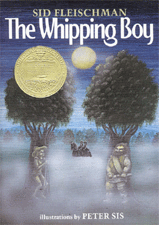
Sid Fleishman died this week at 90—on the day after his birthday. Sid is known for The Whipping Boy (Newbery winner in 1986) and the McBroom series of the 70’s. He’s a father in the field. Along with his son, Paul Fleishman—they are the only father and son to have both won a Newbery.
Sid was a magician before a children’s book writer. I can contest to that—I met him a few years ago at a conference where the audience convinced him to get on stage and perform—he was indeed a performer. He was lively and thoroughly engaged with his audience. A delightful man.
According to the NYTimes obitiuary he “flung himself into the field on a dare.” What a great career that dare turned out to be.
Now I dare all of you to do the same. Go fling yourself into this career. Right now.
Subscribe to:
Posts (Atom)